data storytelling in the age of AI
For more on using AI thoughtfully in data storytelling, explore our growing collection of resources.
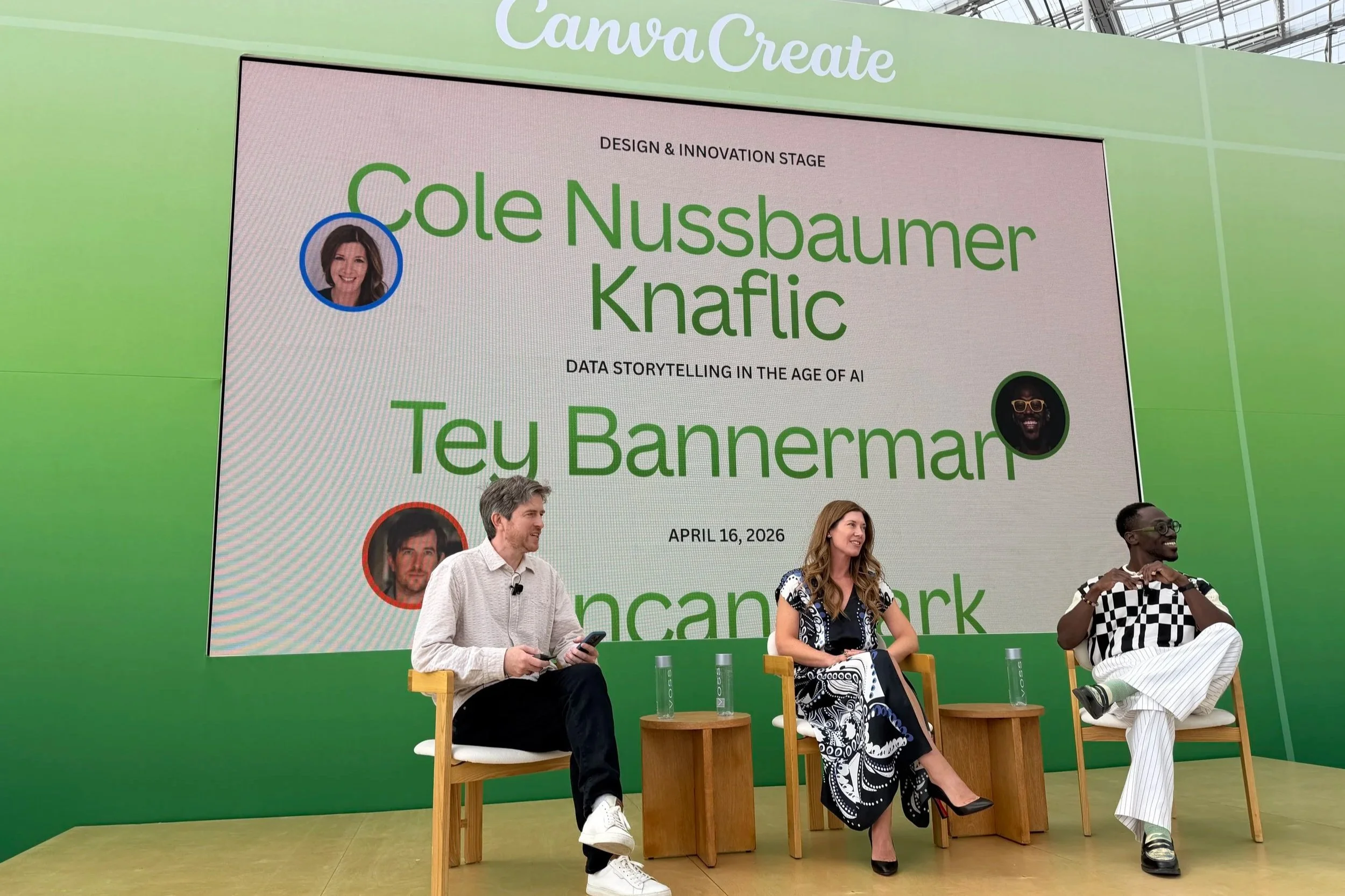
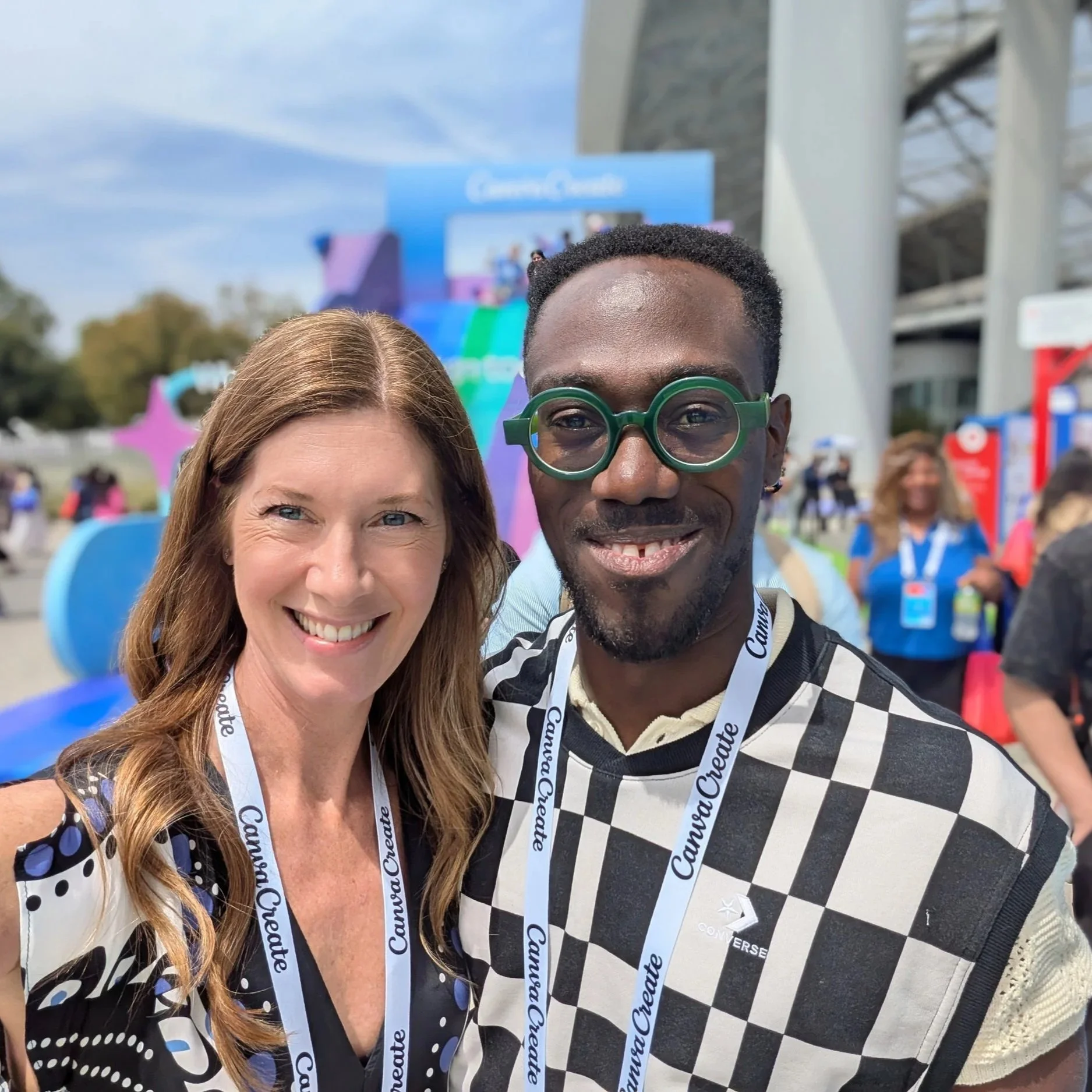
Recently, I had the chance to be part of a panel at Canva Create on Data Storytelling in the Age of AI, alongside Duncan Clark and Tey Bannerman. We discussed how quickly AI is changing what’s possible and what that means for people who work with data. The conversation kept coming back to a provocative question, If AI can generate the charts, what’s left for the human?
Here’s where I’ve landed: the hard part hasn’t changed.
AI can make graphs in seconds. Entire dashboards. Draft presentations. Even suggested narratives. And while the design quality is currently inconsistent, that gap will likely narrow quickly. This is redefining what it means to be “good with data.” Historically, it meant skill with tools: knowing how to write the code, wrangle the data, structure the dashboard, or build the graph.
AI is shifting that. But maybe not in the way people think.
The hard part isn’t making the graph
Tools have been making graphs for decades. Excel. Tableau. Flourish. The mechanics were never the most difficult piece. The hard part has always been deciding what matters: understanding your audience, interpreting what the data means, and figuring out what someone should do differently because of it.
Let’s look at an example.
The following side-by-side shows manager performance scores before and after a pilot manager training program. On the left is the AI-generated chart. On the right is the one that I designed.
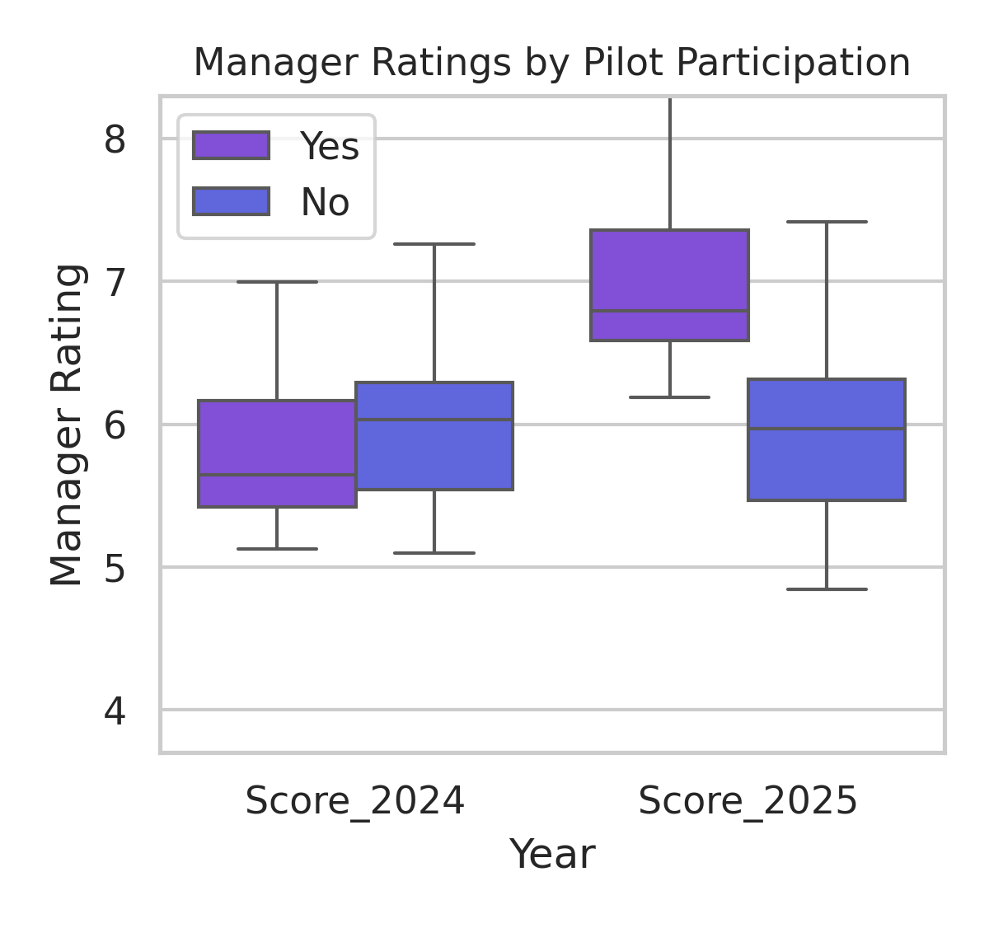
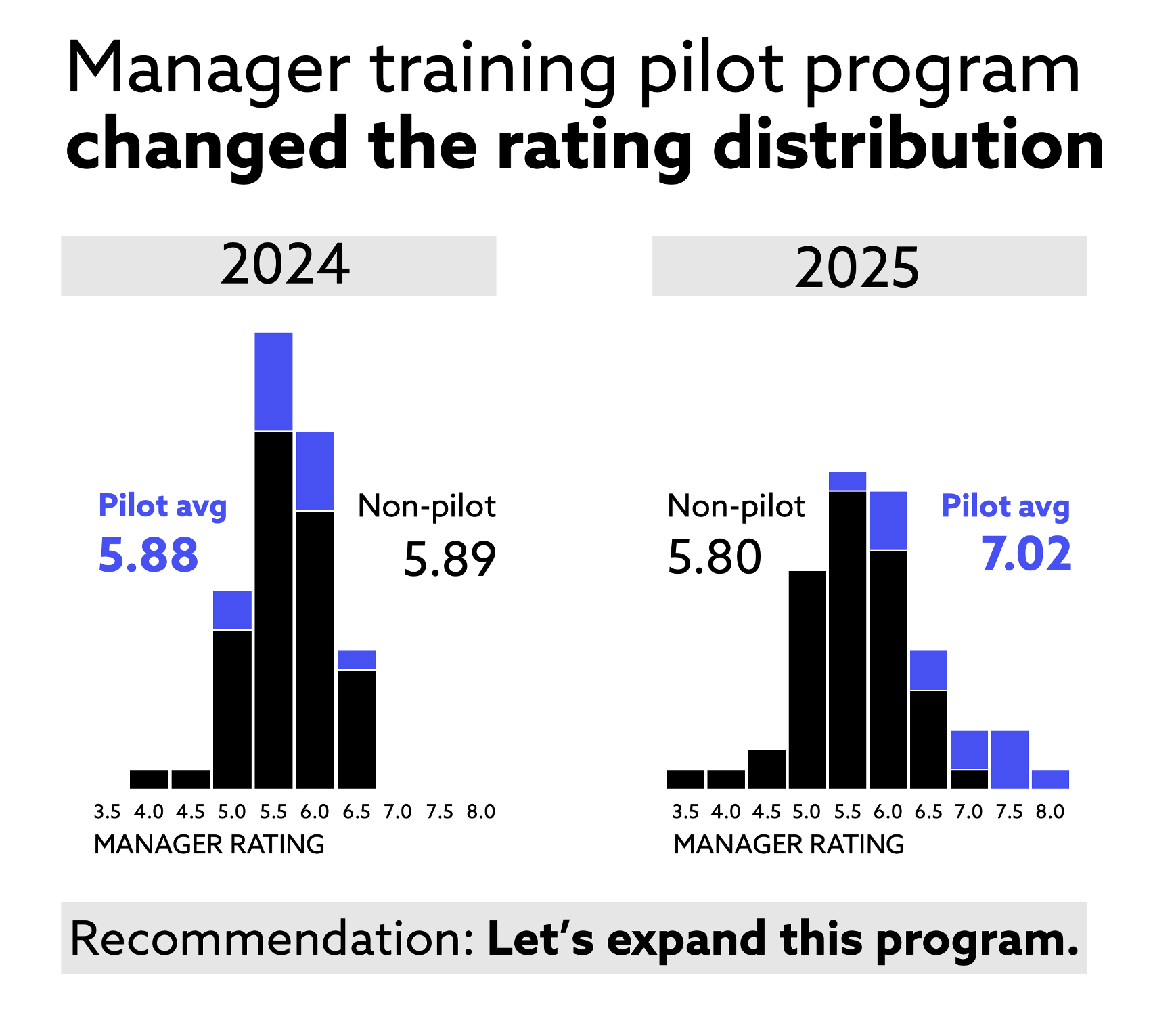
The AI version isn’t wrong. But it also isn’t right for my specific scenario. That’s where I, as the data storyteller, come in. Knowing who my audience is, I can make smart decisions about how to visualize the data, what clutter to eliminate, where to focus attention, and what action to drive. That is data storytelling.
While AI might make it easier to generate output, it doesn’t make these important decisions for you—and it shouldn’t. If anything, it makes the humans making them more important.
Start with thinking—and make use of productive friction
A practical strategy I shared on the panel (one I was teaching well before AI) is to start low tech.
The temptation with any tool—AI or otherwise—is to jump straight into generating graphs and slides. The risk is that you skip the most important step: determining what you actually need to say.

Start analog. Gather your team around a whiteboard or reach for a pen, paper, or my personal favorite low-tech tool: sticky notes. Figure out the plan and the story. Who is it for? What decision are you trying to support? What action do you need to drive?
That gets at something I’ve been thinking more about lately: the role of friction.
Friction, in the classic sense, slows us down. In some instances that’s undesirable. This unhelpful variety comes in the form of confusing graphs, cluttered slides, and unclear structure. This is the friction I’ve spent my career helping others remove. If AI can help eliminate this type of friction, I think that’s great.
But there’s also productive friction. This is the type that forces us to think more clearly before we communicate. Go back to that rule I shared about starting low tech: there is literal friction as you move a pen across paper. That slows us down in really useful ways—to ask what matters, question the data, decide what action makes sense.
This reminds me of a conversation I had with Ken Field for the SWD podcast. Ken is a cartographer, and he talked about how much mapping has changed in the past couple decades. Because the materials to physically make a map were expensive, there was an incredible amount of planning before ever putting pen to paper. All of this changed with GIS tools—suddenly, basically anyone could make a map. And that planning step was no longer required to create one. But it remains just as important for creating an effective one.
That stuck with me, because it’s not really about maps. It’s about thinking.
AI is doing something similar—at a scale far beyond maps. It can remove a lot of the production friction, the mechanics of building graphs and slides. That is incredibly powerful.
But it also makes it easier to skip the most important step: thinking. That’s a major problem. This means the goal shouldn’t be to eliminate friction entirely. It should be to remove the parts that get in the way, while preserving the parts that make us better. Don’t let AI replace your critical thinking!
While AI accelerates production, humans still own judgment—and responsibility
That tension—between speed and judgment—is key. AI is incredibly powerful at generating options. It removes the blank page and speeds up exploration. These are all good things. But someone still has to decide what’s worth focusing on.
It’s important to note that this isn’t a new phenomenon. We’ve seen it before. There was a time—not that long ago—when organizations believed hiring data scientists would solve their data problems. Before that, it was dashboards. While technical expertise is critical, it didn’t crack the real issue: you can generate all the insight in the world, but if people don’t understand it or know how to use it, nothing changes. In this world, an effective data storyteller bridges the gap between insight and action. It is the data storyteller who will bridge the gap with AI as well.
AI can generate answers exceptionally fast. But someone still needs to decide what questions are meaningful, which data is trustworthy, and which action should follow. AI might be able to generate the chart, however humans still own the interpretation. They must decide what it means and what to do next.
It’s also worth highlighting that AI can generate polished-looking outputs very quickly. This can make it easy to overlook flaws. When you do use it for analysis or content creation, it’s critical to remember: you are responsible for what you put in front of an audience. A simple rule still applies: never present a graph you can’t explain.
If you can’t clearly articulate what the data shows, why it matters, and what people should do with it, then it’s not ready. AI doesn’t change that—it just makes it easier to skip that step. But the accountability hasn’t shifted. If your name is on the slide or you are the one presenting it, your judgment should be behind it.
I was talking with a lawyer friend recently who shared something that stuck with me. She had been using AI to help draft briefs and emphasized how important it is to provide strong context up front to get useful output (the corollary to a common warning from my past life building statistical models: garbage in, garbage out). But she also said something else: once the draft is done, it still needs a critical review.
That applies here, too.
AI is designed to satisfy the user. Which means if you’re not careful, it will start telling you what you want to hear. That’s where a second set of eyes becomes incredibly valuable—someone outside the back-and-forth who can question what’s there without bias.
I’ve long been an advocate of getting another perspective on your work. When AI is involved, that step becomes even more important.
AI cannot replace human connection
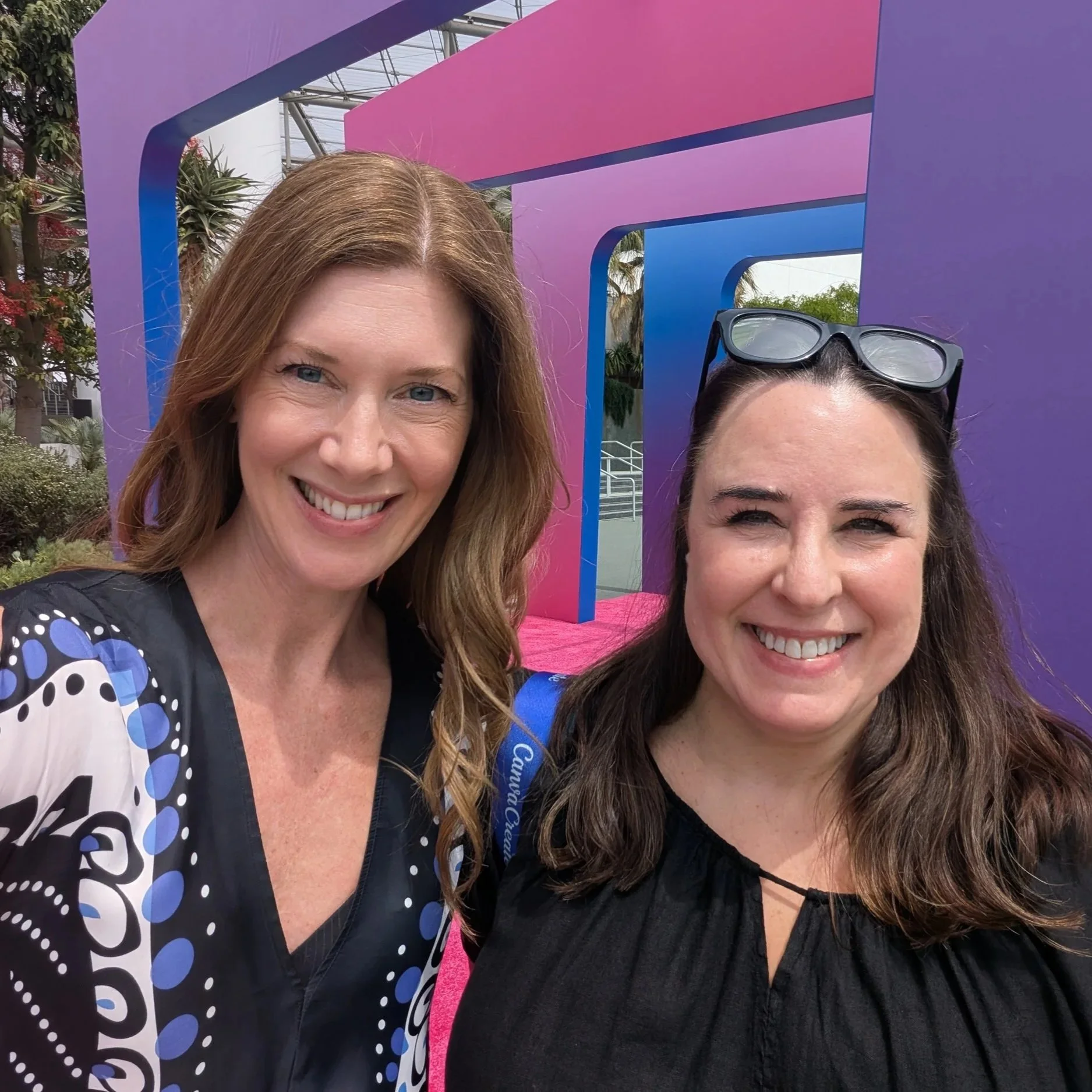
One of the things that struck me most at Canva Create wasn’t the technology—it was the people. I had the chance to connect with so many thoughtful, curious, creative humans, who care deeply about how their work lands and the impact it has.
There’s a lot of focus right now on what AI might replace, and a legitimate concern that it could stunt thinking or dull creativity. But I left with the opposite view. If anything, this is a moment to double down on what makes us human. Storytelling has never been about charts or slides alone. It’s about connection. It’s about understanding your audience, meeting them where they are, and helping them see something in a new way.
While AI can generate content, suggest structure, and speed up production, it doesn’t care. It can’t read a room or build trust. It can’t decide what matters in a way that reflects human context, nuance, and judgment. That part is ours. So rather than asking what AI will take away, a better question is: what does this make more important?
For me, the answer is simple: human connection. Data storytelling has always been about that. In the age of AI, it matters more than ever.

Want to go deeper? Explore more resources for using AI thoughtfully in data storytelling.